Building work in an occupied home brings predictable problems: dust that travels, noise through the working day, services off for periods and rooms out of use. Each can be planned for. A few cannot be made comfortable, and it is better to know that before the start date.
This guide covers the practical side for any building or trade job. The stages of a particular project sit in its own guide. For the order of a project from first visit to handover, see how building projects work with E&N Build Group.
What to settle before the work starts
- How the job affects the house. Ask which rooms will be out of use, for how long, and when the water, power, heating or gas will be off. Whether you can stay in the house depends on the job, and we say so at the site visit. The written scope then sets out what is included, what is not, and what stays provisional until the work opens up.
Who is responsible for site safety. On work for a householder, the client duties under CDM 2015 normally pass to the contractor, or to the principal contractor where there is more than one[1]. A contractor must not start work until reasonable steps have been taken to prevent unauthorised access to the site[2].
Your home insurance. Citizens Advice says to contact your buildings insurer to check you will be covered during the work[9]. Which? reports that structural work, such as an extension or a new kitchen, must be declared, or the policy could be invalidated[10].
Asbestos in older homes. HSE says asbestos can be present in any building built or refurbished before 2000, and that these buildings should be inspected for it[5]. Ask for the parts the work will disturb to be checked before the start, and leave any suspect material alone.
How to prepare the house and live with the work
1. Clear the rooms and protect what stays
Empty the work area completely, and clear the rooms the trades walk through as far as you can. What cannot move should be covered and sealed. Agree which floors, stairs and doors will be protected, and photograph the walkways before the start. Move valuables, documents, medicines and anything you cannot replace out of the work area, or out of the house.
2. Separate the work area from the rooms you live in
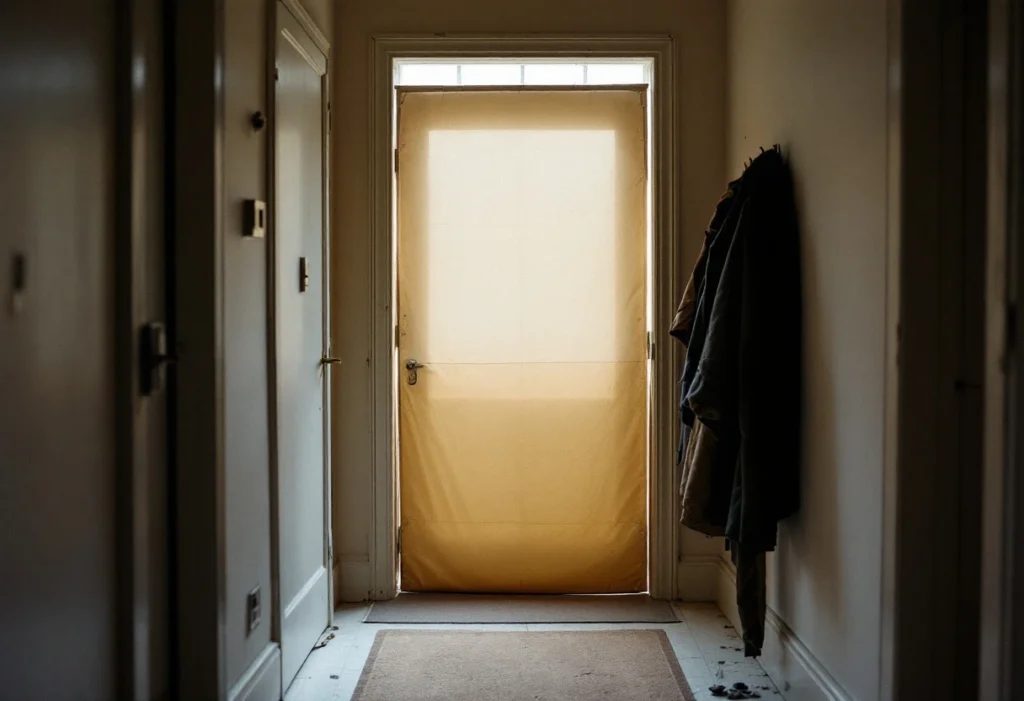
Agree where the site ends inside the house. That can mean dust sheeting over openings, a temporary partition or zipped dust door, and a protected route from the entrance the trades use. Keep doors to the rest of the house shut. How the site is cleaned matters as much. HSE warns that dry sweeping building debris can produce high levels of dust. It recommends damping down, or vacuum attachments on an H or M class extraction unit for finer material[6].
3. Plan around noise and working hours
Noise is heaviest when walls are broken out, masonry is cut or holes are drilled. Ask when those stages fall, and plan calls, sleep and study around them. Many councils publish hours for noisy construction work. Croydon's code of practice, as one example, sets 8am to 6pm on weekdays and 8am to 1pm on Saturdays, with no noisy work on Sundays or bank holidays. The hours apply to substantial works, not DIY[7]. Check your own council's page for the hours that apply.
4. Plan for water, power, heating and gas being off
Services are isolated while they are altered, so expect each to be off at times. Ask for notice of every shutdown and how long it will last. Fill containers before the water goes off and charge devices before the power does. In winter, plan for cold days if the heating is drained down. Work on gas appliances and fittings must be done by a Gas Safe registered engineer[8]. Gas Safe Register also warns against blocking or covering air vents and flues, which gas appliances need to work safely[8]. Dust sheeting should not cover them either. Where a job includes gas work, we arrange it through a subcontracted gas engineer.
5. Set up a temporary kitchen or bathroom
If the kitchen or the only bathroom is part of the job, plan what replaces it. A temporary kitchen can be a table in another room with the fridge, a kettle, a microwave and a washing-up bowl, away from the work area. Without a working bathroom, the household needs somewhere else to wash, and some families move out for those days. Ask whether the trades will use your toilet. HSE guidance allows site welfare to use facilities in an occupied building where the owner agrees, if they are available all the time workers are on site[3].
6. Keep children, pets and visitors out of the work area
HSE notes that some children are drawn to building sites as places to play, and that sites should be secured at the end of each day. Its list for contractors includes covering excavations, removing ladders from scaffolds and locking away hazardous substances[4]. Agree the house rules with everyone, including older children and visitors. Pets need a closed room away from open doors and deliveries, or a stay elsewhere during the loudest weeks.
7. Agree security and keys
Agree who holds keys and how the house is locked at the end of each day. Scaffolding can give a route to upper windows, so check that ladders come down each evening and that nearby windows are locked. Where the back of the house is opened up, ask how it will be secured overnight. If you use a key safe, change the code when the job ends.
8. Tell the neighbours
A short note before the start helps. Give the start date, the working hours, the loudest stages and where deliveries, skips and vans will go. Leave a phone number for questions, and update them if the plan changes.
Living at home during building work: a checklist
| Area | Before the work starts | While the work is going on |
|---|---|---|
| Rooms and belongings | Empty the work area and walkways; move valuables, documents and medicines | Keep the work area closed off; check the floor and stair protection |
| Dust | Agree the sheeting, partitions and the trades' route | Keep doors shut; ask for damping down or H or M class extraction, not dry sweeping[6] |
| Noise | Ask when the loudest stages fall; check your council's hours[7] | Plan calls, sleep and study around the loud stages |
| Water, power and heating | Ask for notice of each shutdown | Fill containers, charge devices, plan for cold days |
| Gas | Gas work only by a Gas Safe registered engineer[8] | Keep air vents and flues uncovered[8] |
| Kitchen and bathroom | Set up a temporary kitchen; plan where to wash | Agree whether the trades use your toilet[3] |
| Children, pets and visitors | Agree the house rules and the site boundary | Check the site is secured at the end of each day[4] |
| Security and keys | List who holds keys | Check ladders and openings are secured overnight[4] |
| Neighbours | Share dates, hours and delivery plans | Update them if the plan changes |
| Insurance | Tell your buildings insurer about the work[9] | Tell the insurer if the house will be empty[10] |
| Asbestos (built or refurbished before 2000) | Ask for the affected areas to be checked[5] | If suspect material is found, work in that area stops[5] |
Scroll sideways to see all columns
When the plan needs adjusting
Dust is getting into the house. Ask for the sheeting or partition to be resealed and the cleaning method checked. HSE warns that dry sweeping can push large amounts of dust into the air[6].
- A service is off for longer than planned. Ask why, and for a new time. If the delay comes from a change to the work, on our jobs anything that departs from the scope is agreed with you before it is built.
Suspect asbestos turns up. HSE says that work must stop immediately if anyone finds material they think may contain asbestos[5].
When is moving out worth considering?
Four situations make staying put much harder, for some or all of the job:
- No heating or water for long periods. A few hours off is manageable. Days without heating in winter, or without a working toilet, are harder, especially for young children or older relatives.
- Structural work over or next to the rooms you live in. Removing load-bearing walls, opening ceilings or breaking through to a loft brings heavy dust and noise into the middle of the house, and can take bedrooms or the stairs out of use.
- Health needs. Someone who is unwell, recovering from an operation, or sensitive to dust or cold may find the work hard to live with. Ask their doctor for advice before the start.
- Most of the house is affected. A full refurbishment or work in every room leaves little space to live in.
If the house will be empty, tell your insurer. Which? reports that most policies limit how long a home can be left empty, often to no more than 60 days[10].
What to expect at the end
When the plan works, everyone in the house knows where the site ends, when each service will be off and what replaces the rooms out of use. At handover you receive the certificates and sign-offs that apply to the work done. Checking the finished work, and what happens if something needs putting right, is covered in handover and aftercare. Allow time for a deep clean before the furniture goes back, as fine dust can keep settling after the last trade leaves.