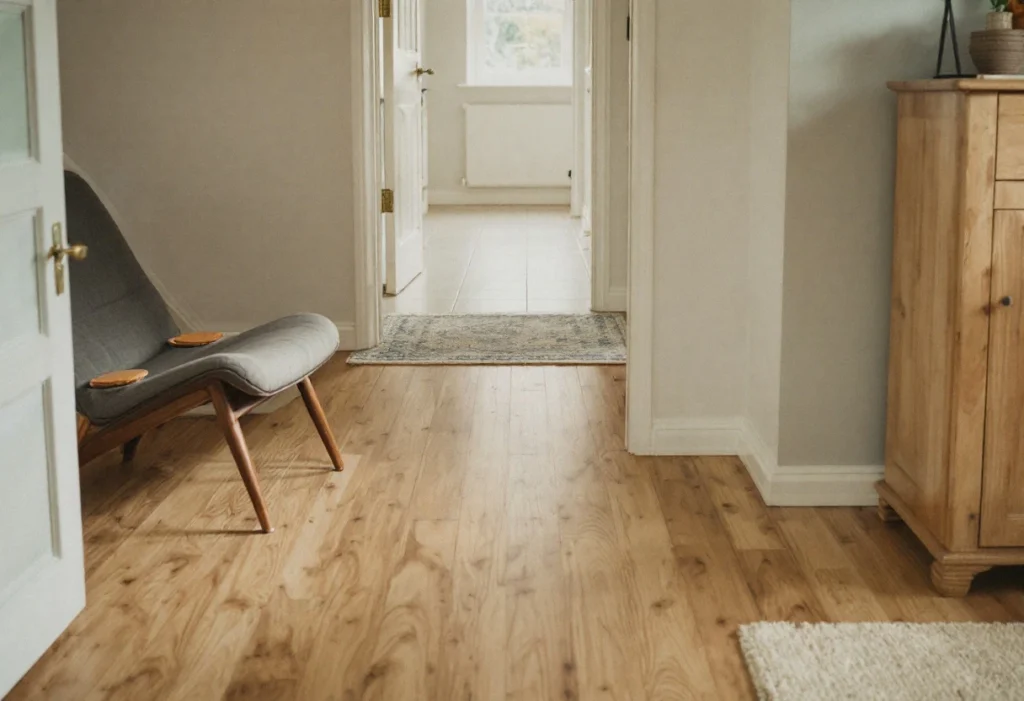
A new floor needs most care in its first weeks, then a simple routine. Tiles are extremely durable if laid correctly[3], but the grout, any sealer and the movement joints need attention. Wood moves with heat and moisture[8], so its care is mostly about grit, water and a steady indoor climate.
This guide covers cleaning, products, sealing, joints and refinishing for floors laid by any installer, and the signs that a floor needs more than cleaning. For repairs, or a new floor in another room, see our flooring service.
What to keep from the installation
Care advice depends on the product, so record what was laid. The Tile Association says cleaning and maintenance information should come from the tile supplier or manufacturer[1]. The same is true of wood. Keep these with the handover papers:
- For tiles. The tile type, such as porcelain, glazed ceramic or natural stone, the grout, and any sealer used.
- For wood. Solid or engineered, the make and range, and whether it is oiled or lacquered.
- Care instructions. The manufacturer's care instructions for the floor and any sealer or finish.
- Spares. Any spare tiles or boards, so a repair can be matched from the same stock.
Tiled and wood floors: care at a glance
| Task | Tiled floor | Wood floor |
|---|---|---|
| Routine cleaning | Clean regularly rather than let dirt build up; dust and lint make smooth hard floors slippery[1] | Which? suggests vacuuming around once a week, with any rotating brush turned off[7] |
| Mopping | Water does most of the work; tiles can be cleaned without chemicals[3] | Which? advises slightly damp, never too wet: too much water can make timber swell and warp[5] |
| Steam | Which? rates it for tiles and grout lines, but warns it can strip a stone sealer[6] | Which? advises against it on unsealed hardwood; check the manufacturer's instructions for any other wood floor[6] |
| Sealing | Some natural stone may need sealing; follow the manufacturer for other tiles and grout[1] | The oil or lacquer finish protects the wood; renew it as the manufacturer instructs |
| Movement | Movement joints around the edges and at door thresholds absorb movement[1] | Which? says solid wood swells in heat and humidity and shrinks in the cold[8] |
| Repair | A cracked tile can be replaced; a line of cracks needs its cause found first | Which? says solid wood can be sanded multiple times; engineered wood only within its wear layer[8] |
Scroll sideways to see all columns
Caring for a tiled floor, step by step
1. Give a new floor time to settle
All material residue, such as adhesive and grout, should be removed immediately after installation, which is the installer's job[1]. A newly tiled shower should be left unused for at least 14 days, as BS 5385 Part 4 recommends[2].
2. Clean little and often
Clean regularly rather than letting dirt build up. Dry dust, fibres and lint can make any smooth hard floor slippery[1]. Vacuum or sweep, then mop with warm water. Tiles can be cleaned without chemicals[3], so keep a cleaner for marks that water does not shift. Which? rates steam for tiles and grout lines[6], but see step 4 for natural stone.
3. Match any cleaner to the tile, stone and grout
Natural stone varies in make-up and surface. Problems can occur when a stone is treated in a way that does not suit its chemistry or finish[1]. Which? tests bathroom sprays on limescale by how well they dissolve a slab of Carrara marble[9]. Follow the manufacturer's care instructions for your floor. Which? recommends trying any new spray on a hidden area first[9].
4. Keep the sealer and the joints working
Some natural stone tiles may need sealing before grouting to avoid staining[1]. Porcelain has extremely low water absorbency, while glazed ceramic has a porous body under the glaze[1]. Whether your tile or grout needs a sealer, and how often, comes from the manufacturer. Which? warns that steam can strip a stone sealer[6].
Movement joints absorb small movements from shrinkage, heat and vibration, which helps prevent tiles and grout cracking[1]. On floors they run around the edge of the tiling, including door thresholds, and are at least 6mm wide[1]. Keep them clear and flexible, including when a floor is re-grouted. Around baths, basins and shower fittings, a silicone sealant or plastic sealing strip prevents water seeping in[1]. Check it when you clean.
Caring for a wood floor, step by step
1. Keep grit off the floor
Put a doormat at each outside door, fit felt pads under chair and table legs, and lift furniture rather than drag it. Which? suggests hard floors need vacuuming around once a week, depending on the household. It advises turning off any rotating brush and cleaning right up to the wall, where dust collects[7].
2. Mop damp, not wet
Which? warns that too much water can make a timber floor swell and warp, and advises a mop that is only slightly damp[5]. It suggests mopping straight after vacuuming, when no dust is left to streak[7]. It also advises against steam on unsealed hardwood, because sudden changes in heat and moisture can warp it[6]. For any other wood floor, follow the manufacturer's care instructions on steam.
3. Know whether the finish is oil or lacquer
Wood floors are commonly finished with oil or lacquer, and the routine above suits both. What differs is the cleaning product and the upkeep of the finish. Check which finish yours has before buying a cleaner. When the finish needs renewing, and with what, is set by the manufacturer's care instructions.
4. Keep heat, humidity and sunlight steady
Which? says solid wood swells in hot, humid rooms and shrinks in the cold, which over time can crack and warp the boards[8]. It also warns that sudden changes in heat and moisture can warp wood[6], so change the heating gradually. Which? notes that engineered wood and parquet can fade in bright sunlight[8], so use blinds in strong sun. The humidity range and any underfloor heating limits are in the manufacturer's care instructions.
5. Refinish when the finish has worn
Which? says solid wood can be sanded back and refinished multiple times[8]. Engineered boards have a real wood top layer, the wear layer, which Which? puts at around 4mm. It can be sanded back and treated to restore the finish[8]. Wear layers vary, so check the manufacturer's information on how many sandings your boards can take.
When a floor needs more than cleaning
Patchy or dusty grout on a new floor. This can come from grout being cleaned off too early[2]. Raise it with the installer rather than scrubbing harder.
Cracks in a line, or near the edges. Movement joints are there to prevent cracking[1], so a pattern of cracks can point to movement the floor cannot absorb. Find the cause before re-grouting, or the cracks may return. The Tile Association runs a paid technical inspection service for anyone not happy with a recent tiling job[4].
- One cracked tile after something was dropped. A single tile can be cut out and replaced, ideally from the spare stock.
Wood that has gapped, cracked or warped. Which? notes that heat and humidity make solid wood swell and shrink[8]. Note what changed in the room, and have the floor checked before refinishing.
What a good routine achieves
Looked after this way, both floors last. The Tile Association gives the reference service life of ceramic tiles as 60 years[3]. Which? says parquet can last well over 50 years with proper maintenance[8].
Planning the next project
Which? calls tiles and stone the best flooring for underfloor heating, because they conduct heat efficiently[10]. It says engineered wood can be used with it, but advises against solid wood, which warps with the temperature changes[10]. If you are planning a new kitchen, settle the floor at the same time as the layout, including whether you want underfloor heating, because the heating affects which floors suit the room. Floor tiling, wood flooring and kitchens can each be booked with us as a standalone job.