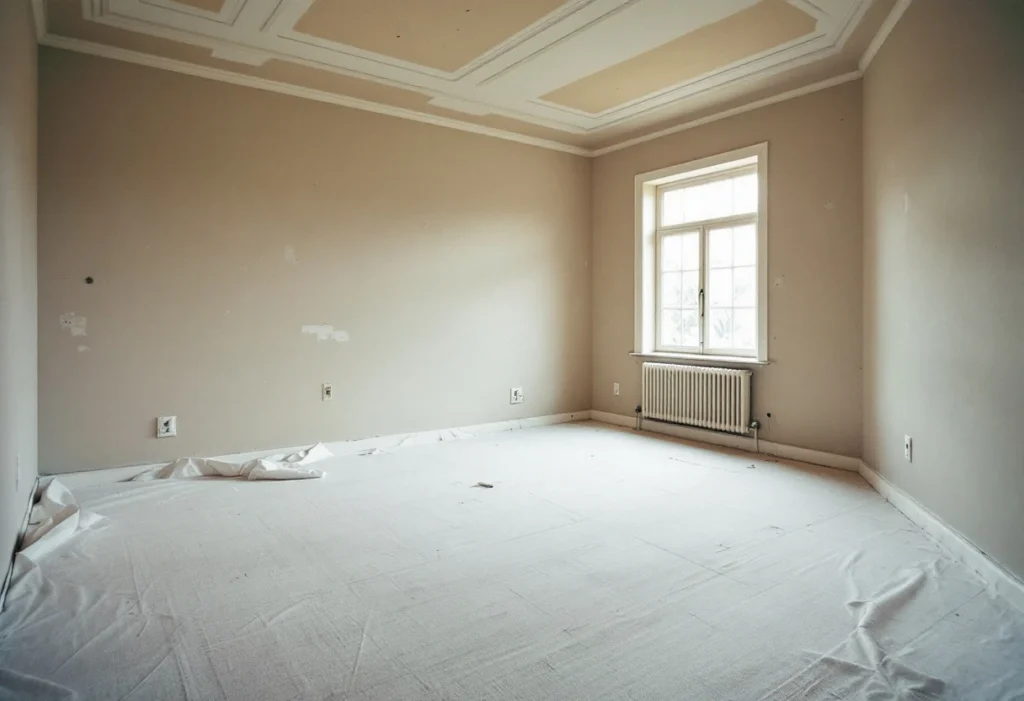
Most delays on a plastering job start before the plasterer arrives. A full room, a socket that still has to move or an unidentified ceiling coating can each stop work on the first morning.
This guide covers your side of a booked job: access, protection, services, old finishes and the edges where new plaster meets other work. It does not cover choosing between a skim, a re-plaster and boards. Both plastering and plasterboard work can be booked as standalone jobs.
What to settle before the start date
- The scope. Which walls and ceilings are being done, and whether each gets a skim, a re-plaster or new boards.
- Whether you stay at home. Whether you can stay in the house depends on the job, and we say so at the site visit.
- The other trades. Who does the electrics, plumbing, joinery, tiling and decorating, and when.
The products. Each plaster and board has its own instructions, and they set the background preparation. British Gypsum's instructions for one finishing plaster say to check it suits the background using its selector guide[1]. That is the installer's job, so this guide does not repeat product figures.
The age of the building. Asbestos may be part of any home built or refurbished before 2000[2], which matters for old finishes (step 6).
How to get the room ready, step by step
1. Clear the room
Take out furniture, rugs and lamps, and empty any cupboards being worked around. Take down pictures, mirrors, shelves, curtains, poles and blinds. If large pieces must stay, agree where they go and who covers them. A wall-mounted TV comes down first. A light fitting or wired smoke alarm is disconnected by whoever does the electrics.
2. Protect the floors and what stays
Plastering is wet work, and cutting boards and sanding joints makes fine dust. Agree what protection the trades bring and what you add. Cover the floors along the route in, fitted units, window boards and the room below a ceiling being worked on, and close off doorways. Do not seal over air vents or flues: Gas Safe Register's advice is not to block or cover them, because gas appliances need them to work safely[3].
3. Plan access, parking and storage
Boards come in large sheets and plaster in heavy bags, so clear the hallway and check tight turns on the stairs. Agree where the van parks, and check the council's parking rules for your street. A skip on the road needs a licence or permit, which the skip hire company gets in most areas. A skip cannot go on the pavement[4]. Materials need a dry place indoors: British Gypsum says its plaster bags should be stored inside, away from moisture, heat and direct sunlight[5].
4. Agree power, water and facilities
Plaster is mixed in clean water with clean equipment, because contamination affects its setting time and strength[5]. Agree which tap and sockets the trades can use, and where tools are washed out. Everyone working on a construction site must have access to toilets and washing facilities. HSE guidance allows a building's own facilities to be used where the owner agrees, not necessarily in writing, if they are available all the time workers are on site[6].
5. Finish the electrics and plumbing first
We carry out work in the order the trades need: structure, then services, then finishes. So the first fix is complete before any board goes up or plaster goes on. Cables, back boxes and pipes are in their final positions. In new partitions or dry lining they run inside the stud or behind the boards, as described under plasterboard installation.
Existing sockets and switches are loosened or removed, with the power isolated, so plaster can go behind them. Whoever does the electrics does this, not the homeowner. All electrical work in a home must comply with the Building Regulations. A new consumer unit, a new circuit and changes to circuits around baths and showers are notifiable in England. Notifiable work is self-certified by an installer registered with a competent person scheme, or notified to building control or a registered third-party certifier before work starts[7].
Taking a radiator off the wall is plumbing work, so agree who does it. Moving a boiler, gas fire or other gas appliance must be done by a Gas Safe registered engineer[3]. Gas work on our jobs is arranged through a subcontracted gas engineer. Gas Safe Register also advises making sure flues do not become enclosed during building work[3], which matters where a wall with a flue is boxed in or dry lined.
6. Decide what happens to old finishes
- Wallpaper. Agree whether it comes off and who strips it. If you strip it, stop if a different coating shows underneath.
Paint. Whether it stays depends on the product. One finishing plaster's data sheet lists plasterboard, flat concrete and flat surfaces treated with bonding agents among its backgrounds[5].
- Old tiles. Agree who removes them, and what happens if the plaster behind comes away.
Textured coatings. Decorative coatings on walls and ceilings, with trade names such as Artex, often painted over[8]. HSE lists them among materials that may contain asbestos in homes built or refurbished before 2000[2].
Do not scrape, sand or steam off a textured coating yourself
HSE says not to repair or remove asbestos materials yourself without training for non-licensed asbestos work. Asbestos materials in good condition and unlikely to be damaged are often best left where they are[2]. Work on textured coatings can be done by non-licensed workers, but they must be trained to recognise and work safely with asbestos. Anyone who thinks they have found asbestos must stop work[8]. Samples go to an analyst accredited by UKAS[2], and the result decides how the surface is treated.
7. Plan the edges: skirting, architraves, windows and tiling
- Skirting and architraves. Off and back on, replaced, or left with the plaster finished to them. Agree who refits, fills and paints.
- Windows. If windows are being replaced, fit them before the reveals are plastered.
Tiling. Say which walls will be tiled. The Tile Association's guidance is that gypsum plaster should cure for at least 4 weeks, and be dry, flush and plumb, before tiling[9]. British Gypsum advises against skim plaster on its moisture resistant boards[5].
- Units and wardrobes. Agree whether they go in before or after the plaster.
8. Keep heating and ventilation available
Agree whether the heating can be used and windows opened during and after the work. Each product sets its own limits. British Gypsum says its Thistle plasters are not suitable for frozen backgrounds[5], and that cold weather extends finishing times[1]. Drying times and painting are covered in plaster drying and decoration readiness.
9. Put who does what in writing
Citizens Advice says to get a quote in writing, not rely on a verbal one. A contract should set out what you are paying for and everything agreed, such as timings, tidying up, materials and payments[10]. The table lists the tasks to assign.
Preparation tasks to assign before the start date
| Task | When | Who could do it | Note |
|---|---|---|---|
| Clearing furniture, pictures, curtains and blinds | Before the start date | You, or the builder if the scope includes it | Agree where large items go |
| Protecting floors and fitted items | Before work starts | The trades, plus anything extra you add | Keep air vents and flues uncovered[3] |
| Skip and parking | Before delivery | The skip hire company, or you in some areas | A skip on the road needs a licence or permit[4] |
| Power, water and a toilet | From the first day | You agree what the trades can use | Facilities available all the time workers are on site[6] |
| First fix electrics and plumbing | Before boarding or plastering | The electrician and plumber | Notifiable electrical work certified or notified[7] |
| Loosening sockets and switches | Before plastering | Whoever does the electrics | Power isolated first |
| Radiators off and back on | Before and after plastering | The plumber | Agree who refits and checks them |
| Moving a gas appliance | Before plastering | A Gas Safe registered engineer[3] | Flues must not become enclosed[3] |
| Wallpaper and old tiles | Before plastering | You or the builder, as agreed | Stop if a textured coating appears |
| Textured coatings | Before any work on them | Identified first, then workers trained for asbestos work[8] | Not a DIY task[2] |
| Skirting and architraves | Before and after plastering | The joiner or builder, as agreed | Include filling and painting |
| Heating and ventilation | During and after the work | You | Product limits apply[5] |
Scroll sideways to see all columns
Before work starts you get a written scope with the quotation. It states what is included, what is not, and what is provisional because it cannot be known until the work opens up, such as the wall under old tiles.
What can turn up during preparation
- Plaster comes away with the paper. The wall may need more than a skim. Anything that departs from the scope is agreed with you before it is built.
A coating could contain asbestos. Work on it stops until it is identified[8].
A flue or vent sits behind planned boarding. Check the plan first, because flues must not become enclosed[3].
The weather turns cold. Plaster does not go onto frozen backgrounds[5], so heat the room or move the date.
What a ready room looks like
On the first morning the room is clear and protected, and access, storage, power, water and a toilet are agreed. The first fix is complete, old finishes are identified and the written scope says who does each task. At handover you receive the certificates and sign-offs that apply to the work done.